Worst Time to Visit Costa Rica Based on Your Travel Style
The worst time to visit Costa Rica depends on your trip style. Late September and October are hardest for Pacific beaches, hiking, road trips, and first-time itineraries, while Christmas and New Year are worst for prices. The Caribbean coast is the key exception, with better weather in October.

There is no single worst time to visit Costa Rica for every traveler, because the least suitable period depends on which coast you visit and whether you care most about beaches, hiking, wildlife, lower prices, or easy road travel. What ruins a Pacific beach week can be perfect for a surfer or a Caribbean trip in the very same days.
If one period had to be singled out, it would be late September through October for the Pacific coast, Central Valley, Arenal, and Monteverde. These are often the rainiest weeks of the year, bringing heavier downpours, muddy trails, difficult road conditions, and a greater chance of cancelled outdoor plans.
The important exception is the Caribbean coast, which frequently enjoys its best, driest weather during October while the Pacific is at its wettest.
This blog breaks the worst time to visit Costa Rica down by travel style, so you can match, or avoid, the wrong month for the specific trip you are planning.

Quick Answer: What Is the Worst Month to Visit Costa Rica?
October is generally the worst month to visit Costa Rica for travelers exploring the Pacific coast, Arenal, Monteverde, or the Central Valley. It commonly falls within the peak of the rainy season, which can disrupt beaches, hiking, road travel, and outdoor tours.
However, October may be one of the better months to visit the Caribbean coast, including Puerto Viejo and Cahuita.
Costa Rica's Most Difficult Travel Periods
| Period | Main Issue | Most Affected Travelers |
|---|---|---|
| Late September to October | Peak Pacific rainfall and difficult roads | First-time visitors, road-trippers, hikers |
| May to November | Green-season rain and humidity | Travelers wanting consistently dry weather |
| Christmas to New Year | Peak prices, crowds, limited availability | Budget and spontaneous travelers |
| March to April | Heat and dry landscapes in some Pacific regions | Hikers and those sensitive to extreme heat |
| Caribbean wet spells | Regional rain outside Pacific patterns | Beach travelers who choose the wrong coast |
The rest of this guide separates the weather problems from the price-and-crowd problems, because the worst time to go to Costa Rica for your wallet is not the same as the worst time for your hiking boots.
When Is the Worst Time to Visit Costa Rica Based on Your Travel Style?
1. For First-Time Visitors: Late September Through October
For a classic first trip taking in Manuel Antonio, Monteverde, Arenal, Guanacaste, and San José, late September through October is often the hardest window. A first visit usually tries to see several of these in one loop, and this is exactly when the Pacific side and the highlands are at their wettest.
Potential difficulties include heavier or longer rain, muddy trails, reduced visibility at viewpoints, road delays, occasional landslides or flooding, and cancelled boat and outdoor tours.
September and October are widely considered the peak rainy period across much of the Pacific side, so this is the clearest single answer to the worst time of year to visit Costa Rica for a first, multi-stop trip.
A little planning goes a long way here, and pairing this guide with a broader set of Costa Rica travel tips before you book helps you route around the wettest zones.
2. For Road Trips: September and October
Heavy rain hits self-drive travelers harder than most, because Costa Rica's more remote routes are where conditions deteriorate fastest. Unpaved roads become slow or muddy, river crossings can become difficult or impassable, and landslides may affect mountain routes.
Daylight driving becomes far more important, and some journeys take considerably longer than map estimates suggest.
If you are driving during this period, a four-wheel drive (4WD) vehicle is worth it for many routes, and it helps to plan fewer overnight bases, keep travel days flexible, and never tackle unfamiliar mountain roads after dark.
This is one of the reasons September and October rank as the worst time to travel to Costa Rica for an ambitious road-trip itinerary, and the worst time to go to Costa Rica specifically for long, remote drives between bases.
3. For Hiking and Outdoor Adventures: Peak Rainy Months
The rainy months in Costa Rica can make outdoor activities less predictable, especially cloud-forest hikes, volcano viewpoints, waterfall trails, zip-lining, and suspension bridges.
Wet conditions mean muddy trails, slippery surfaces, reduced views when cloud sits low, and temporary closures.
It is not all bad, though. Rain also makes vegetation lush and waterfalls genuinely spectacular, so the peak rainy months in Costa Rica are not entirely unsuitable, just less reliable.
Arenal, for example, is often clearest early in the morning before cloud builds, so timing activities for the first hours of daylight helps enormously. For hikers chasing dependable dry trails, this ranks as the worst time to travel to Costa Rica, even though the scenery is at its most dramatic.
4. For a Pacific Beach Holiday: September and October
Pacific beach visitors in these months may face frequent rain, cloudier afternoons, rougher seas, reduced sunset visibility, and less predictable boat tours. For a sun-and-sand holiday specifically, these are among the rainiest months in Costa Rica, and the Pacific coast is the wrong place to be.
There are two exceptions worth knowing. Mornings are often still sunny even in peak season, so early beach time can work. And surfers frequently love this period, because the seasonal swell on Pacific breaks is at its strongest.
What is the worst month to go to Costa Rica for a sunbather can be the best for a surfer, which is exactly why "worst" has to be defined by travel style.
5. For Budget Travelers: Avoid Christmas and New Year
For value rather than weather, the worst time to go to Costa Rica is usually the festive period, not the rainy season. Christmas and New Year bring high hotel rates, expensive flights, busy beaches and national parks, limited last-minute availability, and a much greater need to reserve everything in advance.
The dry season runs roughly from mid-December to April and delivers the most dependable weather, but that same appeal drives peak demand and peak prices.
Budget travelers who can tolerate some rain often find far better value in the green season, so for cost-conscious visitors the festive fortnight, not the wet months, is the real worst time to visit Costa Rica.
6. For Travelers Who Dislike Heat: March and April
The late dry season can feel intensely hot and dry, particularly in Guanacaste on the northern Pacific. March and April bring hot afternoons, dusty scenery, drier waterfalls, browner vegetation, and more tiring daytime activity.
For heat-sensitive travelers, this is arguably the worst month to go to Costa Rica, even though the skies are reliably clear.
This is a milder "worst," and it suits many people. If you prioritize sunshine, dry roads, and reliable beach weather over lush greenery, March and April may still be ideal. For anyone sensitive to heat, though, these are the months to approach with care, especially in the northwest.
Is October Always the Worst Month in Costa Rica?
No, and this is the single most important thing to understand about timing a Costa Rica trip.
October is usually very wet on the Pacific side, but Costa Rica's Caribbean coast often enjoys a comparatively drier and sunnier spell at exactly the same time.
The country's central mountain range reverses the effect of the trade winds through the year, so when the Pacific is drenched, Puerto Viejo, Cahuita, and the southern Caribbean can be among the better places in the country to be.
That makes the Caribbean coast a far smarter October choice than Guanacaste, Manuel Antonio, or Monteverde. A national weather generalization would mislead you here: "avoid Costa Rica in October" is wrong. "Avoid the Pacific in October, and consider the Caribbean instead" is right, and any good Costa Rica travel guideFun Facts About Costa Rica should make that distinction rather than writing off the whole month.
Costa Rica Rainy Season: What Does It Actually Look Like?
Rainy season, locally called the green season, rarely means all-day, everyday rain. A common pattern is a clear, sunny morning, increasing cloud around midday, and an afternoon or evening storm, often heavy but relatively short, with high humidity throughout.
May through August is usually far easier to manage than September and October, with mornings free for activities and rain arriving predictably later in the day. July often brings a short drier interval known locally as veranillo, or "little summer," a mini dry season of two to four weeks that shifts from year to year.
September and October are when full rainy days become more common, and when tropical waves, called ondas, can bring heavier multi-day rain.
That escalation is why the worst time to visit Costa Rica clusters so firmly in those two months for the Pacific side, and why the wettest of the rainy months in Costa Rica land squarely in early autumn.
Read more: Planning another tropical trip? Explore Worst time to visit Thailand: Every traveler should avoid for difficult weather periods, crowds and regional exceptions.
Does Costa Rica Have a Hurricane Season?
The wider Atlantic and Caribbean hurricane season runs from June through November, so the question of Costa Rica's hurricane season is a fair one, but the answer requires nuance rather than alarm.
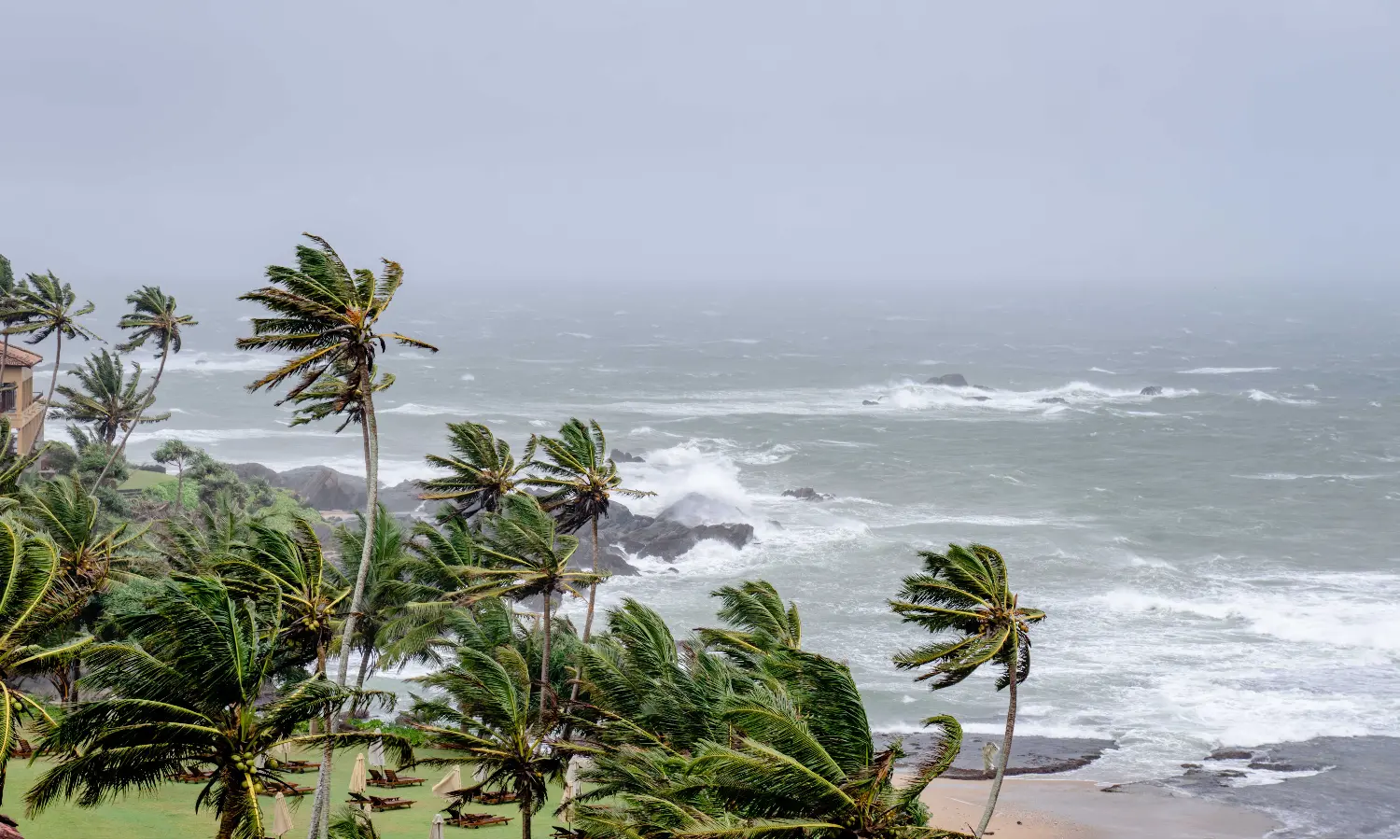
Costa Rica sits largely below the main hurricane belt, and direct hurricane landfalls are genuinely rare, averaging roughly one every two decades and limited to the Caribbean slope.
What matters far more is the indirect effect. Nearby tropical systems can still bring severe rain, flooding, landslides, wind, and travel disruption without ever making landfall.
Recent examples show this clearly: Hurricane Otto in November 2016 was a rare near-direct hit on the northern Caribbean, while Nate in October 2017 and Eta in November 2020 caused serious flooding and damage as they passed close by rather than striking directly.
So it is wrong to say Costa Rica is completely outside hurricane risk. The accurate framing is that during the Costa Rica hurricane season, the danger is usually heavy indirect rain and flooding rather than a direct strike, and it is concentrated on the Caribbean side and in the September-to-November window.
Factoring the Costa Rica hurricane season into a late-year trip mostly means building in flexibility and watching forecasts, not cancelling the idea altogether.
When the "Worst" Time May Actually Be Worth Visiting
The green season carries real advantages that the "worst time" label hides. Lower accommodation rates, far fewer crowds, lush forests, powerful waterfalls, more active wildlife, good Pacific surf, and easier restaurant and tour availability all come with the rain.
Firsthand accounts from green-season travelers consistently note the same thing: even in the rainier months, mornings are frequently sunny, and the country's most popular attractions are blissfully quiet.
If you travel in May, June, or August, plan activities for the morning and stay flexible; the green season can offer the best value and the most peaceful version of Costa Rica you will find all year.
One of the more cheerful fun facts about Costa Rica is that this "worst" season is exactly when the rainforest is at its most alive, and for many travelers it turns out to be their favorite time to visit.
Read more: Comparing island destinations by season? Read Worst time to visit Hawaii based on your travel style for weather risks, peak prices and activity-specific advice.
Better Months to Consider Instead
If the flagged periods do not suit your trip, these are the alternatives at a glance:
January to March
The most dependable Pacific sunshine, but the highest prices and biggest crowds.
May to June
Greener scenery with more manageable, mostly afternoon rain, and strong value.
July
A possible mid-season dry spell (veranillo) in parts of the Pacific, though local school holidays can make beach towns busier.
November
A transition month with steadily improving conditions as the Pacific dries out.
September to October
Choose the Caribbean coast instead of the Pacific, and you flip the worst window into one of the better ones.
Read more: Want to compare the difficult months with the ideal travel windows? Explore Best time to travel to Costa Rica: Weather, wildlife, and complete travel tips for seasonal conditions, costs and wildlife highlights.
What to Do if You Have Already Booked the Rainy Season
A rainy-season trip is very manageable with the right approach:
Plan outdoor activities for the morning, when skies are most often clear. Avoid an overly packed driving itinerary, and choose accommodation near main, paved roads. Carry quick-dry clothing and waterproof bags for electronics.
Keep flexible cancellation options where you can, and monitor weather and road updates daily.
Build in indoor or spa alternatives for washout afternoons, and never drive unfamiliar mountain roads after dark. Done well, none of this feels like a compromise; it is simply how experienced travelers handle Costa Rica in the green season.
Read more: Travelling to East Asia next? Explore Worst time to visit Japan for tourists: Months to avoid for typhoon risk, holiday crowds and uncomfortable weather periods.
Staying Connected in Costa Rica
In the rainy season especially, mobile data stops being a convenience and becomes genuinely useful, for checking weather forecasts, road and navigation updates, hotel and shuttle communication, tour cancellations, and emergency contacts.
When an afternoon storm changes your plans or a road floods, being able to check conditions and rebook on the spot matters.
One point specific to Costa Rica is worth knowing: coverage varies enormously by network. The state operator Kolbi, run by ICE (Instituto Costarricense de Electricidad), has by far the best reach in rural areas, national parks, and the mountains, while other networks are faster in cities but drop off quickly off the main highways.
Since national parks and protected areas cover around a quarter of the country and many have little or no signal, network choice is a real practical decision here, not a detail.
Downloading offline maps before heading into remote areas is always wise, and it is one of the most useful safety habits for anyone asking whether it is safe to travel to Costa Rica in the wet months: staying reachable and informed is most of the answer.
An eSIM Costa Rica option lets you land already connected without hunting for a SIM shop at the airport.
Jetpac is one Costa Rica eSIM worth comparing, covering the country on a single eSIM with hotspot sharing and apps like WhatsApp and Google Maps that keep working even after your data allowance runs out, useful when you are relying on maps in a remote, rainy area.
Read more: Unsure whether your current device and mobile plan will work after landing? Read Will my phone work in Costa Rica? What to expect for network compatibility, roaming and eSIM options.
When choosing the best eSIM for Costa Rica, compare destination coverage, which local network the plan uses (prioritizing rural reach if your itinerary is remote), data validity, hotspot rules, and support before you buy.

FAQs
What is the worst time to visit Costa Rica?
For most travelers, late September through October is the worst time to visit Costa Rica, especially on the Pacific coast, in Arenal, Monteverde, and the Central Valley. These are the peak rainy weeks, bringing muddy trails, difficult roads, and cancelled tours. The Caribbean coast is the major exception and is often at its best then.
Which are the rainiest months in Costa Rica?
September and October are the rainiest months in Costa Rica across the Pacific coast, Central Valley, and highlands, with the heaviest and most frequent full-day rain. May through August is wetter than the dry season but far more manageable, typically with sunny mornings and afternoon showers rather than all-day rain.
Is Costa Rica's Caribbean coast rainy in October?
Usually less so than the Pacific. Because the central mountains reverse the trade-wind effect, the Caribbean coast, including Puerto Viejo and Cahuita, often has one of its driest, sunniest spells in September and October, exactly when the Pacific is at its wettest. It is the smart October choice.
Does Costa Rica have a hurricane season?
The regional hurricane season runs June to November, but Costa Rica sits mostly below the hurricane belt, and direct hits are rare. The real risk during the Costa Rica hurricane season is heavy indirect rain, flooding, and landslides from systems passing nearby, concentrated on the Caribbean side, rather than a direct strike.
Are roads difficult during Costa Rica's rainy season?
They can be, particularly on unpaved and mountain routes in September and October, which is part of why this is the worst time to travel to Costa Rica for road-trippers. Expect muddy surfaces, slower going, occasional landslides, and trickier river crossings. A four-wheel drive helps for remote areas, and it is wise to drive in daylight and stick to main paved roads where possible.
Is the rainy season still worth visiting for lower prices?
Yes, for many travelers. The green season brings lower rates, fewer crowds, lush scenery, powerful waterfalls, active wildlife, and good surf. Plan mornings for activities, stay flexible, and favor May, June, or August over the wettest weeks, and it can be the best-value way to see Costa Rica.
When is Costa Rica most crowded and expensive?
Christmas and New Year, followed by the wider mid-December to April dry season, are the most crowded and expensive, making that festive fortnight the worst time to go to Costa Rica for value. Hotels, flights, and popular parks are at their priciest and busiest, and last-minute availability is limited.
Which part of Costa Rica has the best weather in October?
The Caribbean coast. While the Pacific side sees its heaviest rain, the southern Caribbean around Puerto Viejo and Cahuita often enjoys drier, sunnier conditions. If you are set on an October trip, base yourself there rather than in Guanacaste, Manuel Antonio, or Monteverde.
Disclaimer
This blog is for general informational and planning purposes only. Costa Rica's weather, rainfall patterns, road conditions, and hurricane-related risks are based on typical seasonal patterns and can change at any time and vary year to year. The regional and monthly generalizations here will not hold true for every trip, and microclimates mean conditions can differ sharply over short distances. Entry requirements and mobile network coverage can also change. Always check official weather forecasts, national park and road status, and government travel advisories before and during your trip, and confirm current eSIM coverage and plan details with the provider before buying. Jetpac is not responsible for any inaccuracies, changes, or losses arising from reliance on this information.
Get connected as soon as you land with a Jetpac travel eSIM.